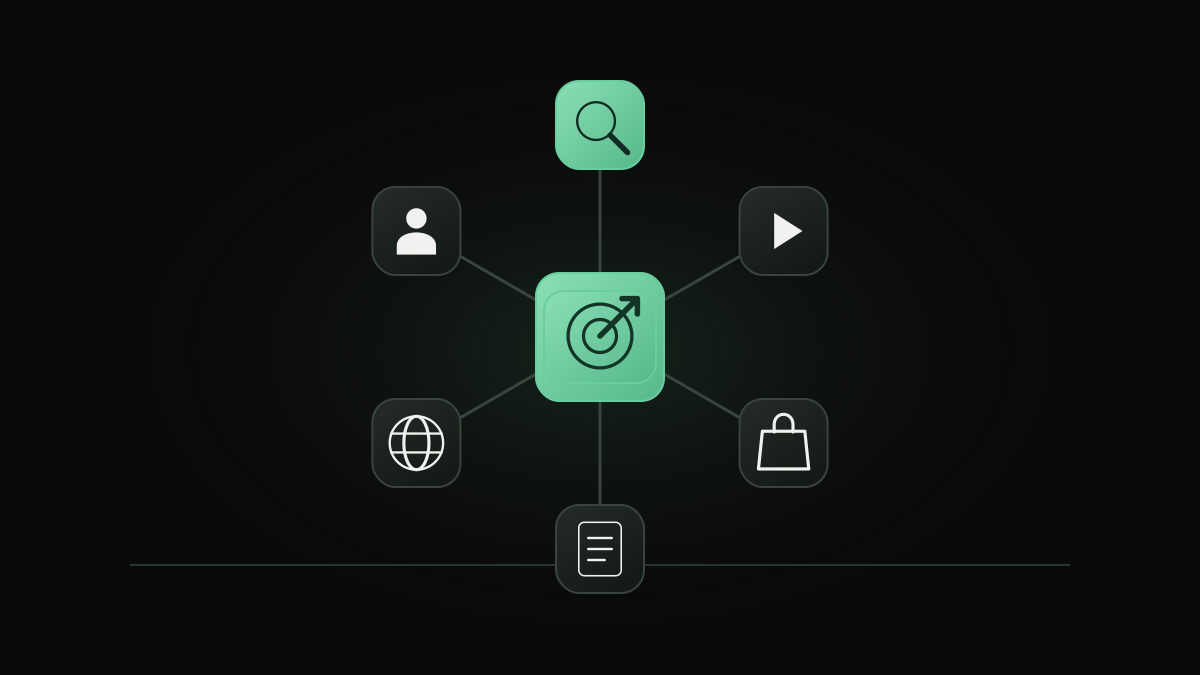
Google Performance Max, often called PMax, is one of the most important campaign types in Google Ads today. Unlike traditional Search, Display, Shopping, YouTube, or Discovery campaigns, Performance Max is designed to help advertisers access multiple Google ad channels from one campaign. Google describes Performance Max as a goal-based campaign type that uses Google AI to optimize bidding, budget, audiences, creatives, attribution, and placements based on the advertiser’s conversion goals.
For advertisers, PMax can be powerful because it reduces the need to manage separate campaigns for every placement. A single campaign may serve ads across Google Search, Shopping, YouTube, Display, Discover, Gmail, and Maps, depending on the campaign settings, assets, feed, and user intent signals. However, this also means PMax requires a different way of thinking.
It is not simply a “set it and forget it” campaign. To make it work, advertisers need to understand its logic, provide strong inputs, structure asset groups carefully, and evaluate performance with the right reports.

What Is Performance Max?
Performance Max is a Google Ads campaign type built around conversion goals. Instead of asking advertisers to manually choose every keyword, placement, or audience segment, PMax uses Google AI to find potential customers across Google’s advertising inventory. Its purpose is to help advertisers maximize conversions or conversion value based on the goals they set in the campaign.
PMax is the only campaign type that covers the entire funnel—it spans Search, Shopping, YouTube, Display, Gmail, and Discover.
PMax breaks down the barriers between Search, Shopping, YouTube, Display, Gmail, and Discover, allowing AI to automatically determine which placement, which creative, and which user to show the ad to.
How Performance Max Works
At its core, Performance Max works through a combination of campaign goals, Smart Bidding, creative assets, audience signals, landing pages, and Google’s cross-channel inventory. The advertiser does not manually decide every impression. Instead, PMax uses available inputs to predict which users are most likely to convert and which ad combinations are most likely to perform.
PMax’s Operating Logic
| User Provide | AI Handles |
|---|---|
| Automatic distribution across all Google ad placements |
| Automatically combine creatives to generate ad variations |
| Automatically optimize bids and audiences |
|
PMax’s Advantages:

PMax’s biggest advantage is that you don’t need to create separate campaigns for each funnel level. AI automatically determines which stage the user is at and then selects the appropriate placements and creatives to reach them. You can see how much money was spent and how many conversions were generated for each placement (search, shopping, YouTube, Display, Discover, etc.), but the AI’s decision-making logic remains a black box.
In other words, you can see “where the money was spent,” but you can’t directly control “where the money should be spent.” If your creatives only contain images and no videos, PMax’s reach in the ToFu layer will be significantly reduced; if you haven’t set audience signals, it might spend a large portion of its budget on BoFu’s brand keywords—which may look like high ROAS, but in reality, it’s just consuming your existing traffic.
What Product is PMax Suited For?
PMax isn’t a panacea for everyone. Its effectiveness is highly dependent on your business stage, product category characteristics, and data foundation.
Many clients initially lack clarity regarding their target audience, keyword choices, and ad placements. PMax can help you “test” out the answers.

You simply provide the AI with creatives and conversion goals, and it automatically tests across all ad placements—Search, Shopping, YouTube, Display, Discover, and Gmail—using real conversion data to tell you: what kind of people your product attracts, which ad placements generate the most conversions, and what creative combinations perform best.
For clients who “don’t know who to target or what keywords to use,” PMax is essentially a low-cost, comprehensive testing tool—it uses AI to run a matrix of “all ad placements × all audiences × all creative combinations” for you, then retains the best-performing combinations.
Furthermore, based on PMax’s search term reports and audience insights, you can reverse-engineer your entire account’s ad structure: whether to optimize Search, YouTube, or Demand Gen shopping campaigns. PMax will be tested first, and other campaigns will be refined later.
How to effectively use PMax?

Maintain independent search campaigns and brand keyword campaigns: Don’t let PMax consume your brand keyword traffic.
High-quality creatives: No matter how smart PMax’s AI is, it can only use the creatives you provide. Poor-quality creatives will result in poor performance.
Utilize first-party data to improve AI accuracy: PMax’s AI model can only become more accurate when fed the right data. Upload your customer email lists, purchase history, high-value user segments, and other first-party data to Google Ads’ “Customer Match” feature and feed it into PMax as part of your audience signaling.
Regularly check search term reports: Although PMax’s search term reports are incomplete, you must review the parts you can see—frequently confirm that the AI isn’t targeting irrelevant keywords (especially at the beginning of an ad campaign).
For account ownership, onboarding and funding questions, explore our Google Ads account opening and funding support.
Official Reference
For platform-specific details and current guidance, consult Google Performance Max campaign documentation.